
Is the HVAC Tune Up Cost Actually Worth It?
August 9, 2026

A Charleston homeowner opens the mailbox and finds two offers for what appears to be the same service. One promises a bargain tune-up for less than dinner for two. The other costs more than twice as much and describes a longer inspection. Both use reassuring words. Neither makes the difference obvious.
That is why the HVAC tune up cost can feel less like a price and more like a guessing game. Homeowners are not only asking, “What will this visit cost?” They are also asking, “Will the technician actually maintain the system, or will this become a sales appointment with a checklist?”
A useful answer starts by separating the advertised fee from the work behind it. A tune-up is worth paying for when it includes meaningful inspection, cleaning, testing, clear documentation, and an honest explanation of anything that needs attention. It is poor value when the scope is vague, the visit is rushed, or every finding suddenly becomes an emergency.
Key Takeaways
- The lowest advertised price is not always the lowest final cost.
- Scope, testing, time, and documentation matter more than the coupon headline.
- A tune-up should identify developing problems without turning every visit into a replacement pitch.
- Charleston’s heat and humidity make airflow, drainage, coils, and system performance especially important.
What Does an HVAC Tune-Up Cost Actually Cover?
The price should cover more than a technician looking at the equipment and changing a filter. A credible maintenance visit usually combines three kinds of work: inspection, basic cleaning or adjustment, and performance testing.
The inspection looks for wear, loose connections, blocked drainage, dirty components, airflow restrictions, and visible signs that the system is not operating normally. Cleaning may include accessible coils, the condensate line, and debris around the outdoor unit. Testing can include thermostat operation, temperature change, electrical readings, safety controls, motor performance, and refrigerant-related checks when appropriate.
The exact checklist varies by system type and company. That variation is normal. What is not normal is an offer that uses the word “tune-up” without explaining whether it includes measured testing, cleaning, written findings, or only a visual inspection.
Before comparing prices, homeowners should ask for the HVAC maintenance checklist attached to each quote. Two companies can charge different amounts because one performs a short inspection while the other spends more time gathering readings, cleaning components, and documenting system condition. Without the scope, the prices are not truly comparable.
Why Can the Price Range Feel So Wide?
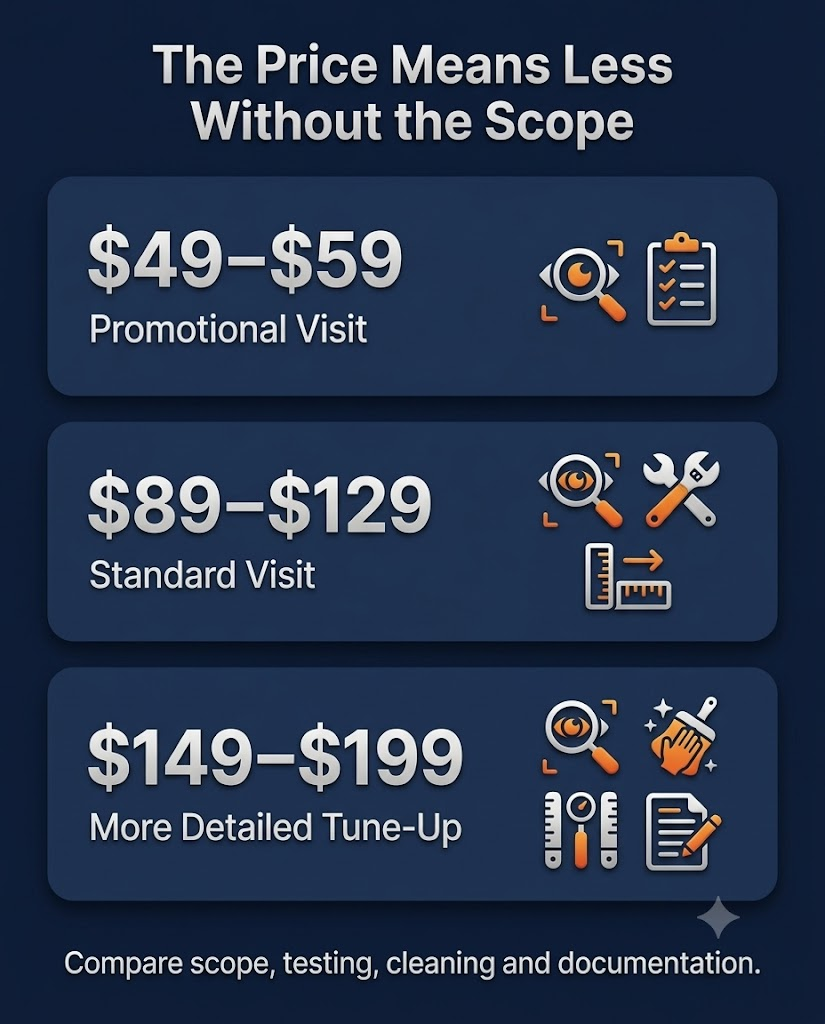
HVAC tune-up offers often range from very inexpensive promotional visits to more comprehensive services priced closer to a standard professional appointment. The supplied pricing examples include specials around $49 to $59, standard visits around $89 to $129, and more detailed tune-ups around $149 to $199. The important difference is not the label. It is what the provider includes and excludes.
A low introductory price can be legitimate. A local company may discount appointments during a slower period, group calls by neighborhood, or offer a limited seasonal promotion. The problem begins when the bargain price only covers enough work to get a technician inside, while cleaning, testing, or other expected items become add-ons.
The final bill may also rise because the system has multiple units, difficult access, overdue maintenance, a clogged drain, a failed electrical component, or a separate repair need. A tune-up fee should not be expected to include replacement parts or major repairs. It should, however, make those boundaries clear before work begins.
| Price factor | Why it changes the quote | What to ask before booking | Warning sign |
| Service scope | A visual check costs less than cleaning and measured testing | “Can you send the complete checklist?” | Vague wording such as “full inspection” with no details |
| System type | Heat pumps, split systems, and multiple units require different procedures | “Is this price per system or per property?” | One low price presented as universal |
| Access and condition | Tight spaces, heavy buildup, or neglected equipment may require more time | “What could create an additional charge?” | Surprise fees disclosed after the visit starts |
| Documentation | Written readings and findings take time but make recommendations easier to evaluate | “Will I receive measured results?” | Only checkmarks with no readings or explanation |
| Repairs and materials | Parts, refrigerant work, or corrective repairs are normally separate | “Will you provide an estimate before repairs?” | Work performed without clear approval |
Is the HVAC Tune Up Cost Worth It?
For many properties, yes, but not because every tune-up produces dramatic savings or guarantees that nothing will break. Maintenance is valuable because it creates a scheduled opportunity to catch developing problems, restore basic operating conditions, and understand the system before a failure becomes urgent.
Consider the difference between a planned visit in mild weather and a breakdown during a humid Charleston afternoon. During the planned visit, the homeowner has time to ask questions, review options, and decide what should be handled now. During the breakdown, comfort is already lost and the decision feels rushed.
A tune-up is most likely to deliver value when the system runs heavily, has not been inspected recently, shows uneven airflow, produces unusual sounds, struggles with humidity, or has a history of clogged drainage. It can also provide a useful baseline after moving into a property with limited maintenance records.
The U.S. Department of Energy notes that replacing a dirty, clogged air-conditioning filter with a clean one can lower the unit’s energy consumption by 15%. That does not mean every tune-up reduces the entire utility bill by the same amount. It shows why basic airflow maintenance matters and why a neglected filter can make equipment work harder.
Benjamin Franklin’s familiar line fits the decision well:
“An ounce of prevention is worth a pound of cure.”
The point is not that prevention eliminates every repair. It is that timely attention can keep a small, understandable issue from becoming a larger, more disruptive one.
Use the CLEAR Value Test Before Booking
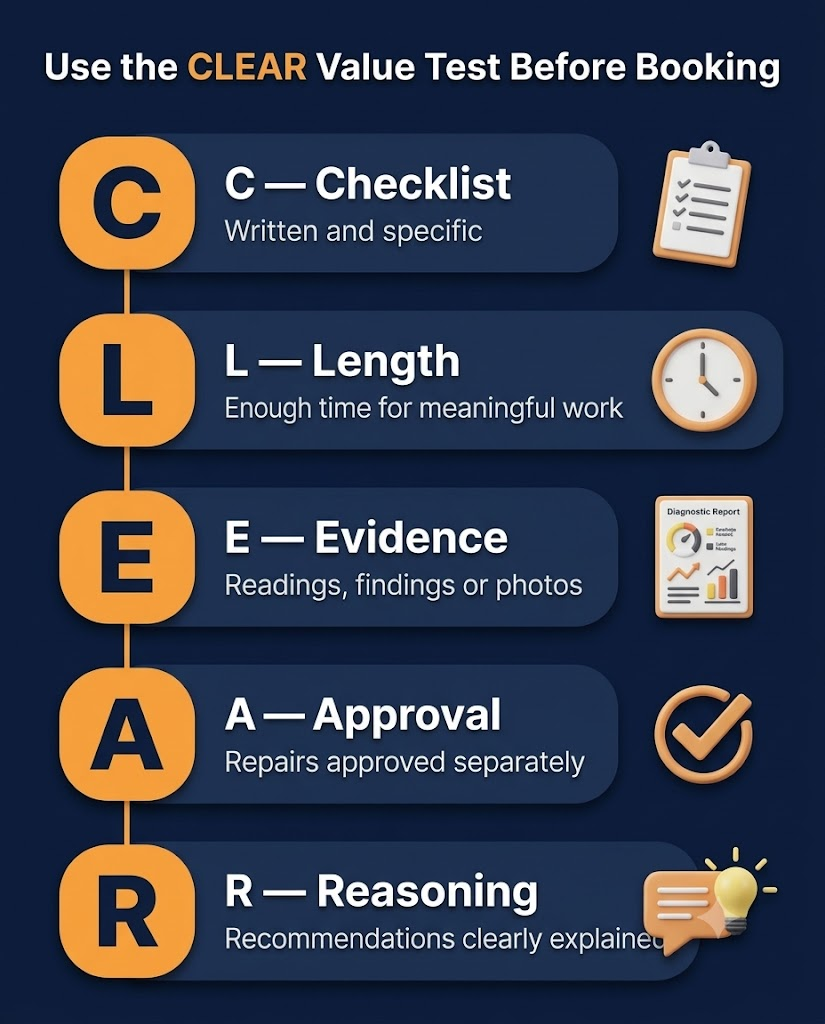
A memorable way to judge a maintenance offer is the CLEAR Value Test:
- Checklist: Is the scope written and specific?
- Length: Is enough appointment time allowed for meaningful work?
- Evidence: Will the technician record readings, findings, or photos?
- Approval: Are repairs quoted and approved separately?
- Reasoning: Can the technician explain why each recommendation matters?
This framework helps answer how often should hvac be serviced without treating frequency as the only issue. A recurring appointment is only useful when the service itself is credible. Paying for two weak visits does not create more value than paying for one thorough, well-timed visit.
The CLEAR test also reduces the fear of upselling. A recommendation supported by measured evidence, a clear explanation, and options is different from a sudden warning that demands immediate approval. Homeowners should feel informed, not cornered.
What Should a Proper Tune-Up Include?
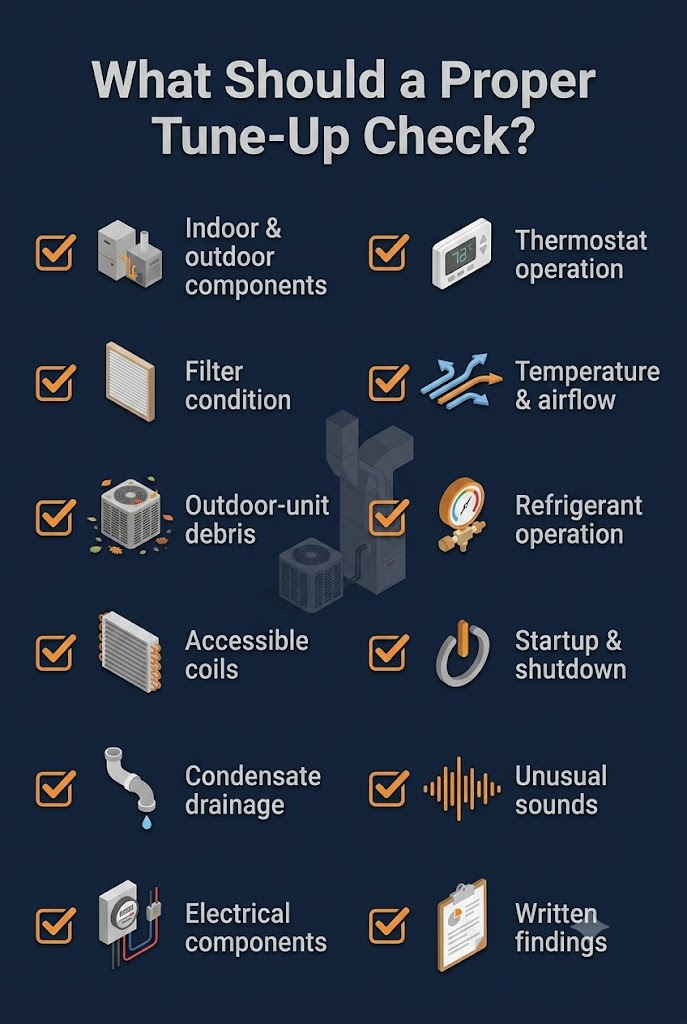
A practical hvac maintenance checklist should cover the parts of the system that affect comfort, reliability, drainage, airflow, electrical operation, and safety. Depending on the equipment, a professional visit may include:
- Inspecting accessible indoor and outdoor components
- Checking and cleaning the air filter when included
- Clearing debris around the outdoor unit
- Inspecting accessible coils and cleaning them when the service scope includes it
- Checking the condensate drain and signs of moisture backup
- Tightening accessible electrical connections
- Testing capacitors, contactors, motors, and safety controls when applicable
- Verifying thermostat operation
- Measuring temperature change and airflow-related performance
- Checking refrigerant operation using appropriate procedures
- Listening for abnormal sounds and observing startup and shutdown
- Providing written findings and separating maintenance from repairs
A thorough visit often takes longer than a quick sales call because the technician needs time to let the system operate, observe its behavior, and collect useful readings. The source material repeatedly distinguishes measured, documented service from a brief inspection that returns only a page of checkmarks.
Homeowners do not need to memorize every component. They simply need enough information to ask, “What will you inspect, what will you clean, what will you measure, and what will I receive afterward?”
Charleston Conditions Change What Deserves Attention
Local context matters. In Charleston and the surrounding Lowcountry, cooling systems often work through long periods of heat and moisture. That makes drainage, coil condition, airflow, thermostat accuracy, and humidity control central to comfort.
A system can still turn on and produce cool air while struggling in less obvious ways. One room may stay warmer. The indoor air may feel sticky. The unit may run for long stretches. A drain may begin backing up. These patterns do not automatically mean the equipment needs replacement. They do mean the property deserves diagnosis rather than guesswork.
People searching for HVAC Charleston SC services should ask whether the tune-up accounts for the property’s actual symptoms. A generic checklist is useful, but a good technician also listens to what the homeowner, landlord, property manager, or business operator has noticed.
For commercial properties, the conversation may include occupied hours, customer comfort, equipment serving different zones, and the risk of disruption. For rental properties, documentation may matter as much as the service itself because owners and managers need a clear record of what was inspected and what should happen next.
One-Off Visit or Maintenance Plan?
A one-off tune-up can make sense for a newer system, a recently purchased home, a pre-season check, or a homeowner who wants to evaluate a company before making a longer commitment.
A maintenance plan can make sense when it includes services the customer will genuinely use, such as scheduled seasonal visits, priority booking, reduced diagnostic fees, repair discounts, or documented maintenance history. The plan is not automatically better simply because the annual price looks lower than two individual visits.
Compare the plan using four questions:
- How many systems and visits are included?
- Is the checklist identical to the one-off service?
- Which fees, parts, or repairs are excluded?
- What happens if the customer cancels or sells the property?
The best choice depends on the equipment, property use, budget, and level of support desired. The question is not “Which option is cheapest?” It is “Which option makes the expected work and total cost easiest to understand?”
Do This, Not That
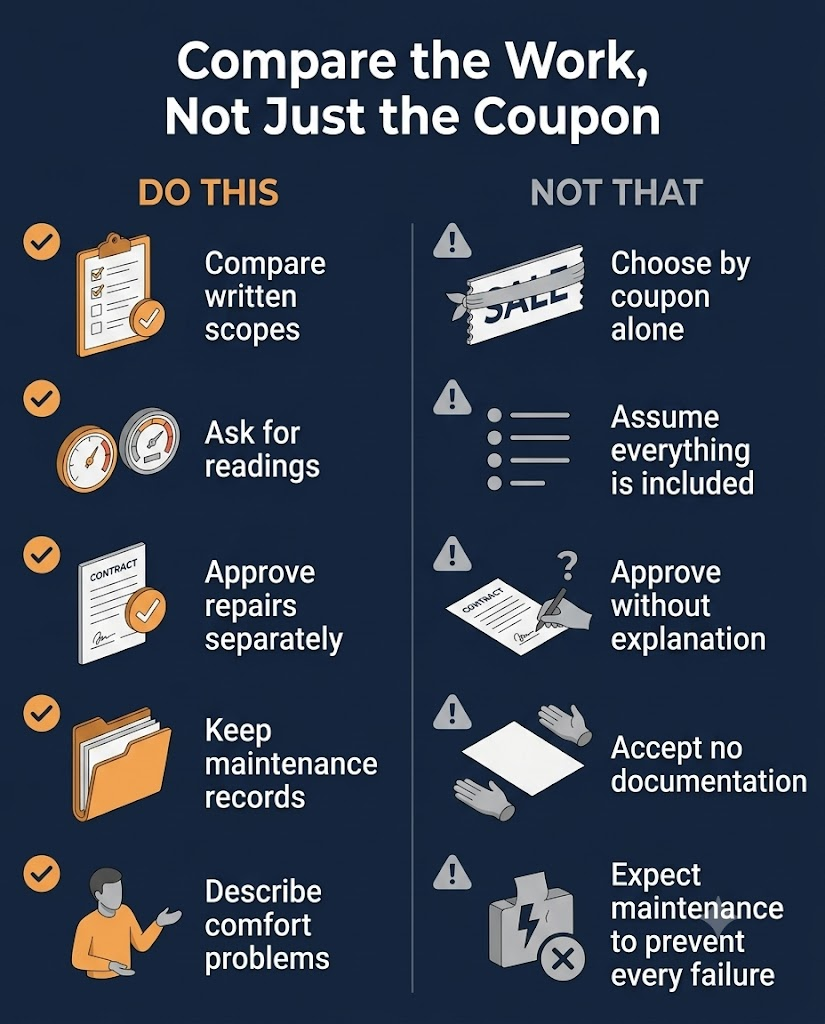
Do this: Compare written scopes. Ask for readings. Request an estimate before repairs. Keep maintenance records. Describe comfort problems before the technician starts.
Not that: Choose solely by coupon price. Assume every tune-up includes coil cleaning or refrigerant work. Approve a major repair without an explanation. Ignore a short visit with no documentation. Treat maintenance as proof that the system can never fail.
This distinction is especially useful when researching how often should hvac be serviced. Timing matters, but the quality of each visit matters more. For many Charleston properties, checking cooling equipment before sustained summer demand and heating operation before cooler weather creates a practical rhythm. The exact schedule should still reflect system type, age, usage, manufacturer guidance, and prior findings.
A Familiar Real-World Scenario
Imagine a homeowner who books the lowest-priced special because the air conditioner still seems to work. The technician arrives, looks at the filter, checks the thermostat, and quickly presents several urgent upgrades. The homeowner leaves the visit with more anxiety than clarity.
Now imagine the same homeowner receiving a written hvac maintenance checklist before booking. The appointment includes enough time for operation, drainage inspection, electrical testing, airflow observations, and documented findings. A weak capacitor is identified, but the technician explains the reading, the current risk, the repair price, and whether the decision must be made immediately.
The second visit may cost more upfront. It also gives the homeowner something valuable: a reasoned decision instead of a pressured reaction. That is the real standard for determining whether the HVAC tune up cost was worthwhile.
When a Tune-Up Is Not the Right Service
Maintenance is not a substitute for repair. If the system is not running, repeatedly trips a breaker, leaks heavily, produces burning odors, freezes, makes severe mechanical noises, or cannot maintain a safe indoor temperature, the property may need a diagnostic service call rather than a routine tune-up.
The difference should be clear at scheduling. A tune-up is proactive maintenance for operating equipment. A diagnostic visit investigates a known malfunction. Combining the two without explanation can create confusion about fees and expectations.
The same principle applies to replacement. An older system or expensive failure may justify a repair-versus-replacement discussion, but age alone should not end the conversation. The recommendation should consider condition, repair history, comfort, efficiency, property needs, budget, and the likely value of further repairs.
How to Choose a Professional Without Getting Pressured
Start with the written scope. Then verify licensing and insurance, ask whether the company services the system type, and find out how recommendations are presented. A trustworthy process should allow the technician to explain findings in plain language and give the customer room to decide.
Useful questions include:
- Is the advertised price per unit?
- How long is the appointment scheduled for?
- Which cleaning tasks are included?
- Will electrical or performance readings be recorded?
- Are technicians paid commissions on repairs or replacements?
- Will additional work require approval?
- Is a written report included?
When comparing hvac charleston sc providers, look beyond star ratings and promotional language. Reviews that describe communication, punctuality, explanations, cleanliness, and follow-through often reveal more about the service experience than a low coupon price.

Conclusion: Pay for Clarity, Not Just a Coupon
The hvac tune up cost is worth it when the visit replaces uncertainty with useful information. A good tune-up should help the property owner understand what was checked, what was cleaned, what was measured, what may need attention, and what can reasonably wait.
For Charleston homeowners, landlords, property managers, and businesses, dependable comfort begins with diagnosis rather than an automatic repair or replacement recommendation. Charleston Air Pros offers HVAC and AC repair, preventive maintenance, diagnostics, airflow and ventilation support, thermostat upgrades, indoor humidity and air quality solutions, and residential or commercial HVAC service built around clear communication and practical recommendations. To request service, visit contact us page or email info@charlestonairpros.com.
Frequently Asked Questions
What makes a good HVAC tune-up?
A good tune-up combines inspection, cleaning, testing, and clear documentation. The homeowner should understand both what was done and why any additional work is recommended.
What are the best practices before booking maintenance?
Request the checklist, confirm whether pricing is per system, ask what is excluded, and make sure repairs require separate approval.
How do homeowners compare HVAC tune-up cost estimates?
Compare scope, appointment length, testing, documentation, exclusions, and system count. The lowest headline price may not represent the lowest complete cost.
How often should HVAC be serviced?
The schedule depends on system type, usage, condition, manufacturer guidance, and local climate. Many properties benefit from pre-season checks, especially before heavy cooling demand.
When should someone hire a professional instead of doing DIY maintenance?
Hire a professional for electrical testing, refrigerant-related work, safety checks, persistent drainage problems, unusual noises, weak performance, or recurring comfort issues.
Which services may be separate from a tune-up?
Repairs, replacement parts, major coil cleaning, refrigerant leak work, duct repair, and advanced indoor air quality services may be priced separately.
Can a custom maintenance plan be useful?
Yes. A custom plan can help owners of multiple systems, rental properties, or commercial spaces align visit frequency, documentation, and priority support with actual needs.
What should a professional HVAC report include?
It should identify inspected items, measured readings where relevant, observed concerns, completed maintenance, recommended next steps, and estimates for separate repairs.
What is the best way to avoid HVAC upselling?
Ask for evidence, options, urgency, and written pricing. A credible recommendation should remain understandable even after the technician leaves.
What local HVAC support is available for Charleston properties?
The local provider supports repair, maintenance, diagnostics, installation, airflow, ventilation, thermostat, humidity, indoor air quality, and commercial HVAC needs.