
What AC Repair Costs Before Anyone Has Opened a Single Panel
August 18, 2026
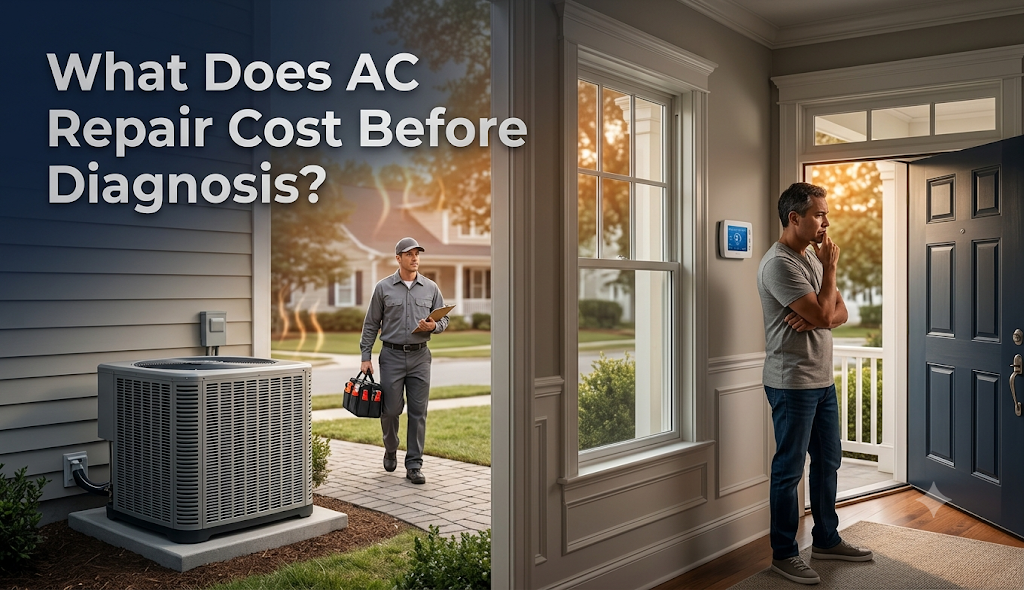
A Charleston homeowner hears the air conditioner struggle, looks at the thermostat, and reaches for the phone. Before anyone arrives, one question is already competing with the heat:
“How much is this going to cost?”
That is where anxiety around ac repair cost begins. The homeowner does not know whether the problem is a small electrical fault, an airflow issue, a refrigerant problem, or something major. They also do not know whether the first fee they hear is reasonable, whether it will be credited toward a repair, or whether paying for diagnosis means paying for “nothing” if they decide not to proceed.
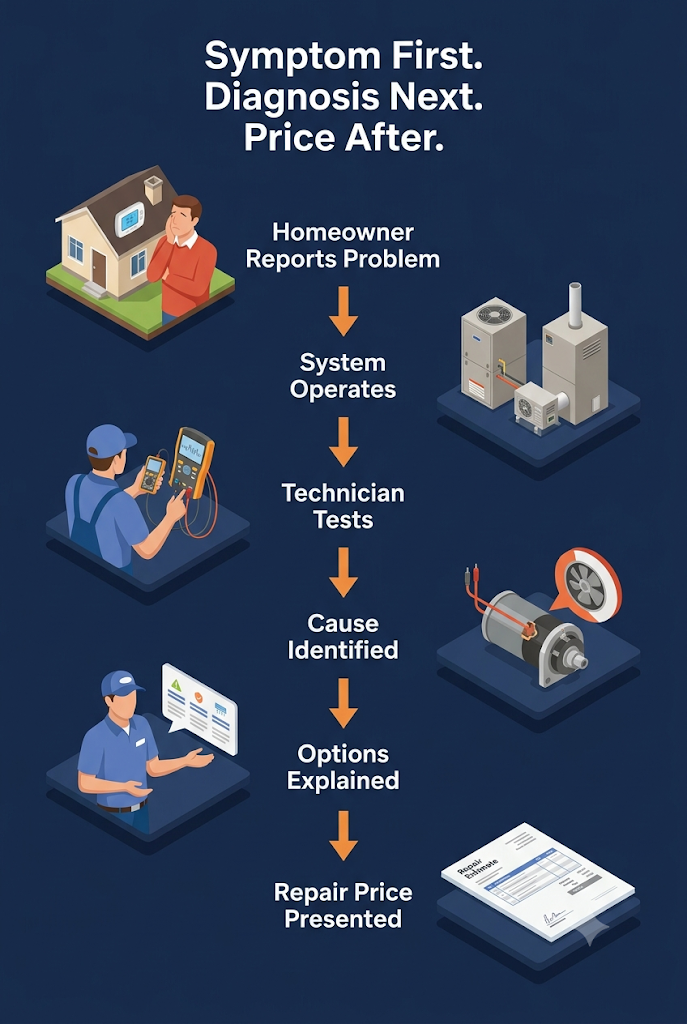
The uncomfortable truth is that a trustworthy repair price usually cannot exist before the problem is identified. The symptom may be obvious, but the cause often is not. AC not cooling describes what the homeowner feels. It does not identify what a technician needs to repair.
Key Takeaways
- A HVAC diagnostic fee pays for troubleshooting and professional judgment, not just arrival.
- A fair HVAC repair estimate should follow findings, not guesswork.
- Cheap upfront pricing can be misleading if the scope of diagnosis is unclear.
- Homeowners should compare what is included, what was found, and what happens next.
What Can AC Repair Cost Before Anyone Opens the Panel?
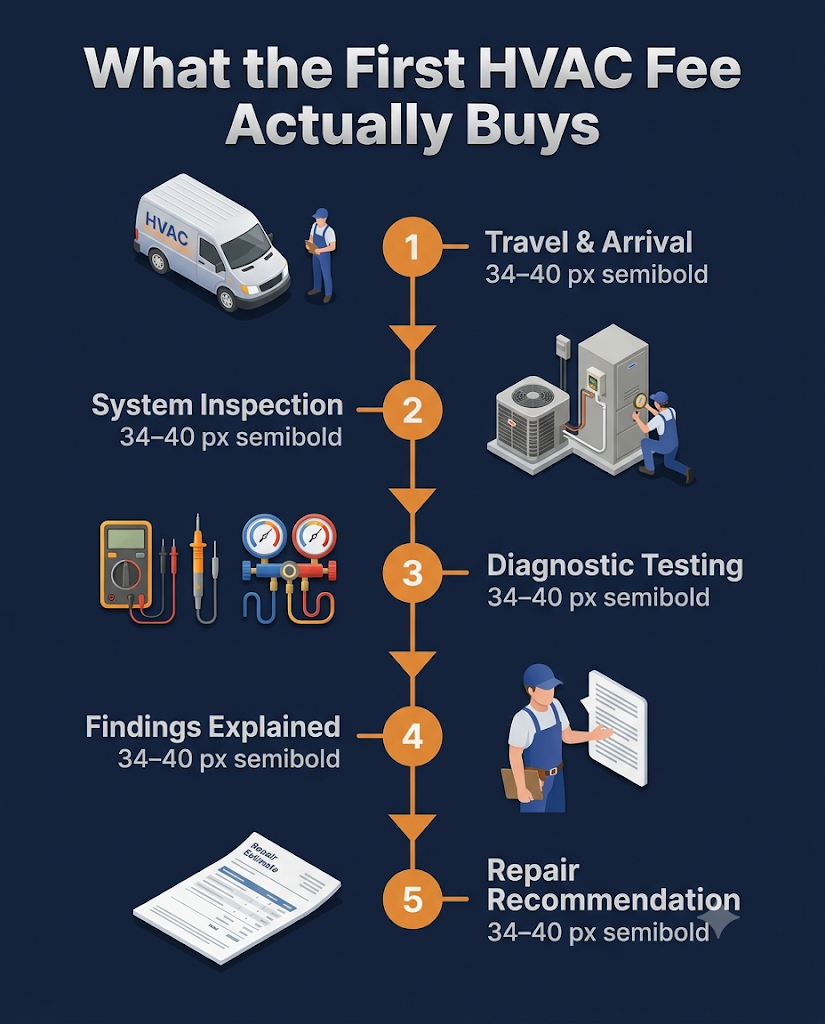
Before inspection begins, the only price a company can responsibly explain with confidence is usually the price of getting a qualified technician to the property and diagnosing the reported problem.
That first charge may be described as a HVAC diagnostic fee, AC service call fee, dispatch fee, or another company-specific term. The wording matters less than what the fee actually includes.
A homeowner should know whether the charge covers travel, initial inspection, diagnostic testing, and an explanation of findings. They should also ask whether it is separate from the repair price or may be applied toward approved work.
What the fee cannot honestly promise is the final air conditioning repair cost before the system has been evaluated. Two homes can report the same symptom and need completely different solutions.
If the complaint is ac not cooling but running, one system may have an airflow restriction while another has an electrical or refrigeration fault. The phone description helps dispatch the right type of service, but it does not replace testing.
A Diagnostic Fee Pays for Clarity, Not a Visit
A diagnostic visit is easy to misunderstand because the homeowner cannot take the diagnosis home in a box. There may be no new part installed during that first stage. Yet the work is still real.
For context, the U.S. Bureau of Labor Statistics reported a median hourly wage of $29.33 for heating, air conditioning, and refrigeration mechanics and installers in May 2025.
That is a labor-market wage figure, not a consumer service rate, so it should not be used to calculate what a Charleston service call “should” cost. It does help illustrate that HVAC diagnostics involve skilled technical labor before business expenses such as vehicles, tools, insurance, administration, and travel are considered.
The value of the visit is not that someone stood beside the condenser. It is that the homeowner should come away knowing more than they knew before the appointment.
Why Can’t a Technician Quote the Repair by Phone?
Because symptoms are not diagnoses.
A homeowner may say the air is warm, the outdoor unit is loud, the system cycles strangely, or the second floor will not cool. Each description is useful, but each can point to several possible causes.
Even a seemingly specific complaint can mislead. An ac not cooling problem might begin with a filter, thermostat, control, blower, coil, electrical component, refrigerant condition, or a combination of factors. A price quoted before the cause is verified is therefore based on an assumption.
That is risky for both sides. If the estimate is too low, the homeowner may feel baited when the actual work is different. If it is too high, they may approve unnecessary expense because the number sounded authoritative.
A useful phone conversation should establish what the homeowner is seeing, what the initial visit includes, how the company handles diagnostic charges, and when a repair price will be presented.
The First HVAC Charge Should Have a Clear Purpose
A homeowner deciding whether to call anyone at all should not have to guess what the first charge means.
Before scheduling, it is reasonable to ask what the AC service call fee or diagnostic charge covers. Does it include troubleshooting? Is there a separate dispatch charge? Will the technician explain the findings? Is pricing provided before additional work begins?
Clear answers reduce the fear that the customer is paying merely for a truck to stop in the driveway.
Warren Buffett wrote in his 2008 shareholder letter that Benjamin Graham taught him:
“Price is what you pay; value is what you get.”
The distinction fits HVAC service well. A diagnostic fee has poor value if the homeowner is left with vague statements and pressure. It has much stronger value if it produces a clear explanation of what failed, what evidence supports the finding, and what options make sense.
What Should a Real HVAC Diagnosis Include?
For a cooling problem, the technician may begin with a visual inspection and observe the system during operation. The thermostat and controls can be checked. Airflow may be evaluated at returns and supplies. Temperature performance may be reviewed. Electrical components may require testing. Refrigerant conditions can require measurement when the symptoms point in that direction.
The key is sequence. Good troubleshooting moves from basic observations toward more specific testing, ruling out simpler causes before condemning expensive components.
If the homeowner searched “AC repair Charleston, SC” because the system suddenly stopped cooling, the useful result of the visit should be an explanation that connects symptoms to findings.
A good diagnostic conversation should ultimately answer three questions: What is wrong? How was that determined? What are the reasonable next steps?
How Is the Actual Repair Price Built?
Once the cause is identified, the repair price can become specific.
The total may reflect the part or material involved, technician labor, the difficulty of accessing the component, system configuration, refrigerant-related work when applicable, additional testing, and whether the visit occurs under normal or emergency service conditions.
Warranty status can matter too. A component may have manufacturer coverage while labor, shipping, refrigerant, or related work remains separate. The homeowner should ask rather than assume what a warranty covers.
The more useful comparison is not, “Is this exactly what someone in another state paid?” It is, “Does this estimate clearly match the diagnosed work on this system?”
That question becomes even more important when the conversation shifts toward new ac unit cost. A replacement estimate and a repair estimate solve different problems and should not be blurred together simply because the repair is inconvenient.
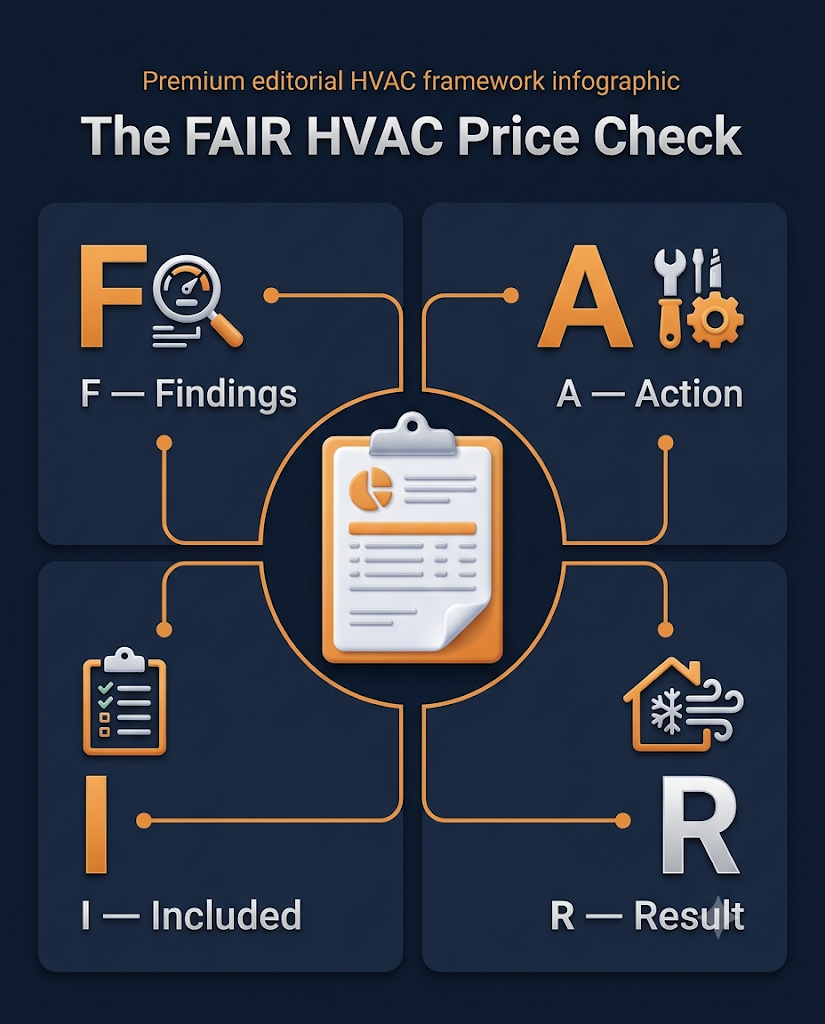
The FAIR Check Before Approving HVAC Work
A simple framework can help a homeowner slow the decision down without delaying a necessary repair.
F — Findings: What exactly did the technician find? The diagnosis should be understandable in plain language.
A — Action: What work is being recommended, and how does it address the failure?
I — Included: What does the quoted price include? Ask about labor, parts, diagnostic charges, and clearly relevant additional work.
R — Result: What should the homeowner reasonably expect after the repair, and are there unresolved concerns with the rest of the system?
| What to ask | Why it matters | Useful answer | Red flag |
| What did testing find? | Connects price to evidence | A specific fault or performance problem | Vague pressure without findings |
| What does the repair include? | Defines the scope | Parts, labor, and relevant work explained | Unclear add-ons |
| Is the diagnostic charge separate? | Prevents billing surprise | Policy explained before approval | Fee structure changes unexpectedly |
| What happens if repair is declined? | Clarifies options | Findings and choices stay understandable | Immediate pressure |
| Why repair instead of replace? | Frames long-term value | System condition and repair value discussed | Age alone decides everything |
Is a Low Diagnostic Fee Always the Better Deal?
No. A low diagnostic charge can be perfectly legitimate, but the number alone does not tell the homeowner what the visit includes.
Does the company explain the fee before arrival? Does the technician perform actual troubleshooting? Are findings discussed before work begins? Is the AC repair quote clear enough to understand?
The right question is not, “Who gets through the door cheapest?” It is, “Who can explain what the fee buys and what happens after the diagnosis?”
That mindset also protects against the opposite mistake. A higher diagnostic fee does not automatically mean more expertise or better service. The value has to show up in the process, findings, communication, and recommendations.
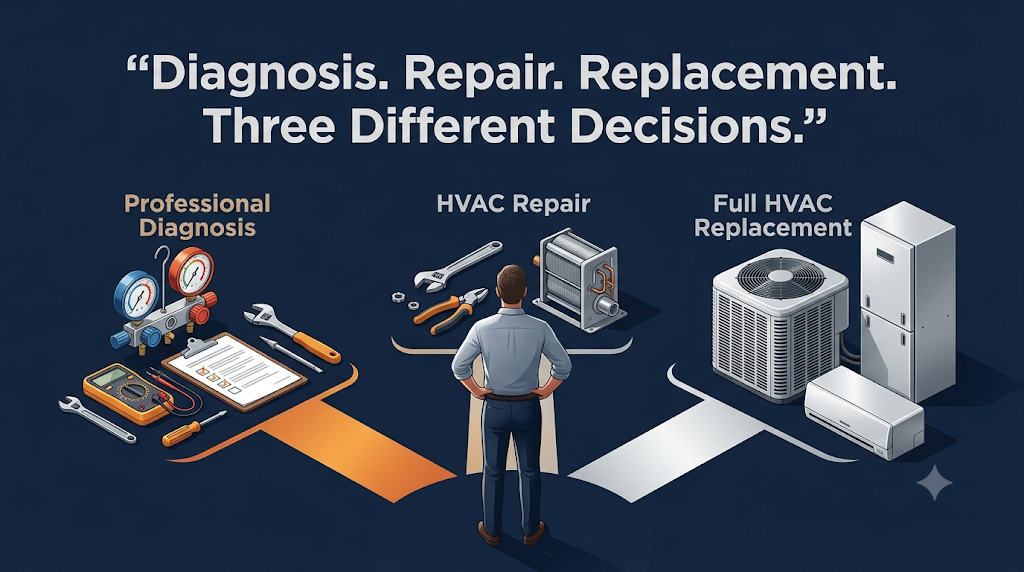
Keep Diagnosis, Repair, and Replacement in Separate Buckets
Homeowners often become overwhelmed because several different decisions get collapsed into one conversation.
The first decision is whether to pay for diagnosis.
The second is whether to approve a repair after the cause is known.
The third, when relevant, is whether the system’s broader condition makes replacement worth considering.
A homeowner with an ac not cooling but running problem may call expecting a repair. If testing reveals a focused fault on otherwise serviceable equipment, the decision may stay simple. If testing reveals a major failure on equipment with other serious concerns, repair-versus-replacement deserves a separate conversation.
Separating the decisions creates room to ask better questions about reliability, system condition, current failure, remaining concerns, and the property’s comfort needs.
How Can Homeowners Spot a Fair HVAC Repair Estimate?
A fair estimate is understandable before it is approved.
It should describe the recommended work in enough detail that the homeowner knows what problem is being addressed. It should explain whether the diagnostic charge is included, separate, or handled according to another stated policy.
For an HVAC repair estimate, useful questions include:
- What failed?
- What test or observation supports that conclusion?
- What is included in the quoted work?
- Are there conditions that could change the price?
- What should the system do differently after the repair?
A clear estimate does not guarantee the repair will be cheap. It makes the cost traceable to the work.
Do This Before You Approve an AC Repair Quote
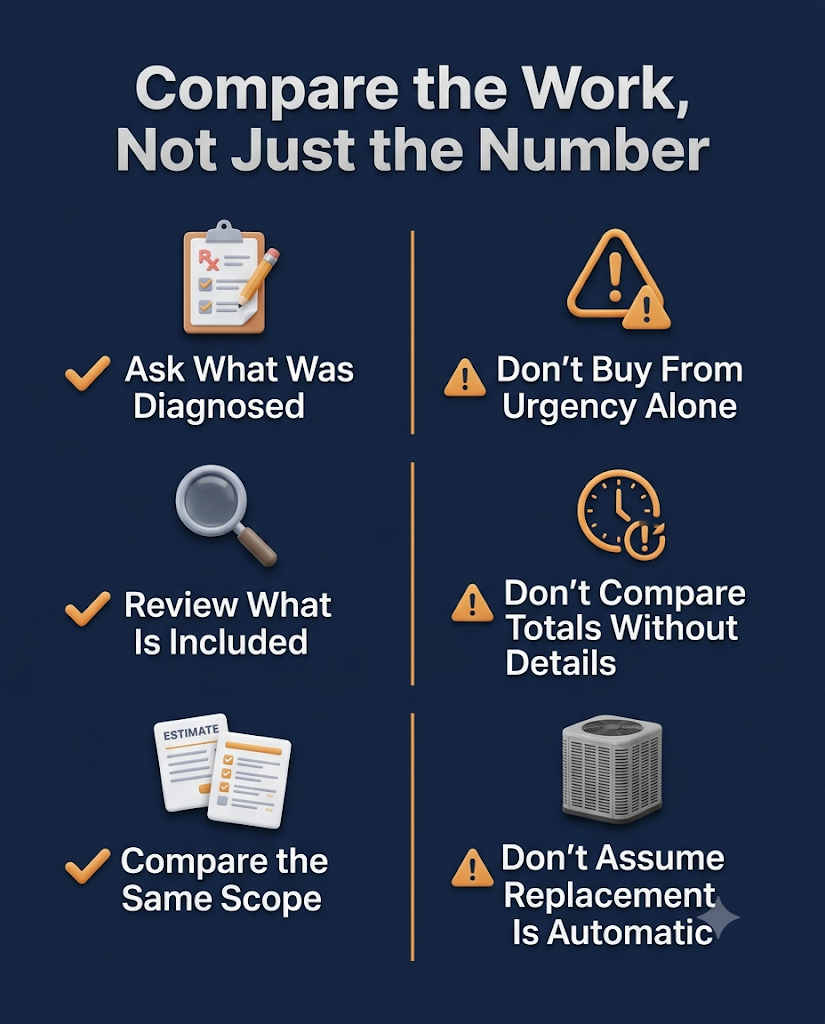
Do this: Ask what the diagnostic charge covers before the appointment.
Not that: Assume every company uses “service call” and “diagnostic fee” in exactly the same way.
Do this: Ask the technician to explain what testing found before reviewing the repair recommendation.
Not that: Approve work simply because the house is hot and the conversation feels urgent.
Do this: Compare the scope of work when considering another estimate.
Not that: Compare only the final number while ignoring whether the companies are proposing the same repair.
Do this: Ask why replacement is being discussed if the conversation moves toward new ac unit cost.
Not that: Treat an older system as automatically unrepairable without understanding its actual condition.
When Is a Diagnostic Fee Worth Paying?
A diagnostic fee is worth paying when the homeowner receives useful professional judgment in return.
The visit should move the situation from uncertainty to clarity. The homeowner should know what problem was identified, what testing supported the diagnosis, and what choices follow from it.
Someone calling because ac not cooling is an active problem is primarily paying to find the cause, not simply to have someone confirm that the home feels warm.
A diagnosis also has value when the homeowner declines the repair. If the findings are clear, the customer can still use that information to consider timing, budget, a second opinion, or replacement planning.
Paying a fee and learning nothing useful feels wasted. Paying a fee and gaining a defensible answer can prevent much larger guessing.
A Charleston Homeowner Faces Two Very Different Quotes
Consider a familiar scenario, not a claimed customer case.
A Charleston homeowner wakes to a warm house and has already confirmed that the thermostat is set correctly. They call two HVAC companies because the fear of being overcharged is almost as strong as the desire to get cold air back.
The first conversation focuses almost entirely on the cheapest possible arrival fee. The homeowner likes the number but cannot get a clear answer about what the visit includes or when repair pricing will be presented.
The second conversation explains that the initial visit is diagnostic. The reported cooling problem will be evaluated, findings will be discussed, and additional work will require a recommendation.
At the house, testing identifies a specific fault. The technician explains why the symptom occurred, what the repair would address, and what is not currently showing signs of failure. The homeowner can now judge the AC repair quote against an actual scope.
The better decision was not automatically the cheaper or more expensive initial fee. It was choosing a process that turned uncertainty into information.

What Should a Homeowner Ask Before Scheduling Service?
A short phone conversation can prevent most fee confusion.
Ask what the initial charge is called and what it covers. Ask whether repair pricing is presented before work begins. Ask how the company handles the diagnostic charge if the homeowner approves a repair. Ask whether emergency scheduling follows a different policy.
If the search started with ac repair charleston sc, local climate also matters. Charleston cooling failures can feel urgent because heat and humidity quickly make indoor conditions uncomfortable. Urgency, however, should make pricing communication clearer, not less clear.
The best pre-visit conversation sets expectations without pretending to know the final repair before testing.
When Does Replacement Enter the Cost Conversation?
Replacement should enter when the condition of the system makes it relevant, not merely because a repair has a price attached to it.
A technician may reasonably discuss replacement when the current failure is substantial, the equipment has broader reliability concerns, important components are deteriorating, or repeated repairs are changing the value equation.
The homeowner should understand why replacement is being considered and what problem it would solve.
A diagnosis-first approach leaves room for both outcomes. Repair can be the sensible choice when it restores dependable operation. Replacement can be the sensible choice when further repair does not offer enough value.
The common thread is evidence before spending.
Conclusion: Know What the First HVAC Dollar Is Buying
Before anyone opens a panel, a homeowner may not know the final ac repair cost. That uncertainty is not automatically a warning sign. HVAC systems contain interacting electrical, mechanical, airflow, and refrigeration components, so the cause often has to be identified before the price of the repair can be responsibly defined.
What homeowners can know in advance is what the first fee buys, how diagnosis will be handled, whether findings will be explained, and whether additional work requires approval.
That is the real benchmark for a fair first call: not simply the lowest number, but the clearest path from symptom to diagnosis to decision.
For Charleston homeowners, landlords, property managers, and businesses looking for that diagnosis-first approach, Charleston Air Pros provides AC repair, system diagnostics, maintenance, airflow and thermostat support, installation, replacement guidance, and other heating and cooling services focused on clear recommendations and dependable system performance. Contact info@charlestonairpros.com or visit Charleston Air Pros to request service.
FAQ
What Makes a Good HVAC Diagnostic Service?
A good AC diagnostic service connects the homeowner’s symptoms to specific testing, explains the findings clearly, and provides repair or replacement options based on what was actually discovered.
What Are the Best Practices for Comparing AC Repair Quotes?
Compare the diagnosed problem, scope of work, included labor and parts, fee policy, and expected result. Two prices are not truly comparable when the companies are proposing different work.
How Can Homeowners Understand an HVAC Diagnostic Fee?
Ask what the fee covers, whether it is separate from repair pricing, and what information the homeowner receives after troubleshooting. Policies vary, so clarity matters more than assumptions.
When Should a Homeowner Hire a Professional for AC Problems?
Professional diagnosis makes sense when basic thermostat and filter checks do not explain a cooling problem or technical electrical, mechanical, airflow, or refrigerant testing is needed.
What Services Can Be Included After an AC Diagnosis?
Depending on the findings, the next step may involve repair, maintenance, airflow correction, thermostat work, system testing, installation planning, or replacement evaluation.
How Does a Professional HVAC Estimate Protect the Homeowner?
A professional HVAC repair estimate ties the proposed price to a defined scope of work so the homeowner can understand what is being repaired before authorizing it.
What Should Homeowners Know About AC Repair Cost Versus Replacement Cost?
They are separate decisions. Repair pricing addresses the diagnosed failure, while replacement pricing requires a broader assessment of equipment, installation conditions, property needs, and system configuration.
What Is the Best Question to Ask Before Approving HVAC Work?
Ask, “What did the testing find, and how does this recommendation address it?” That keeps the conversation focused on evidence rather than pressure.